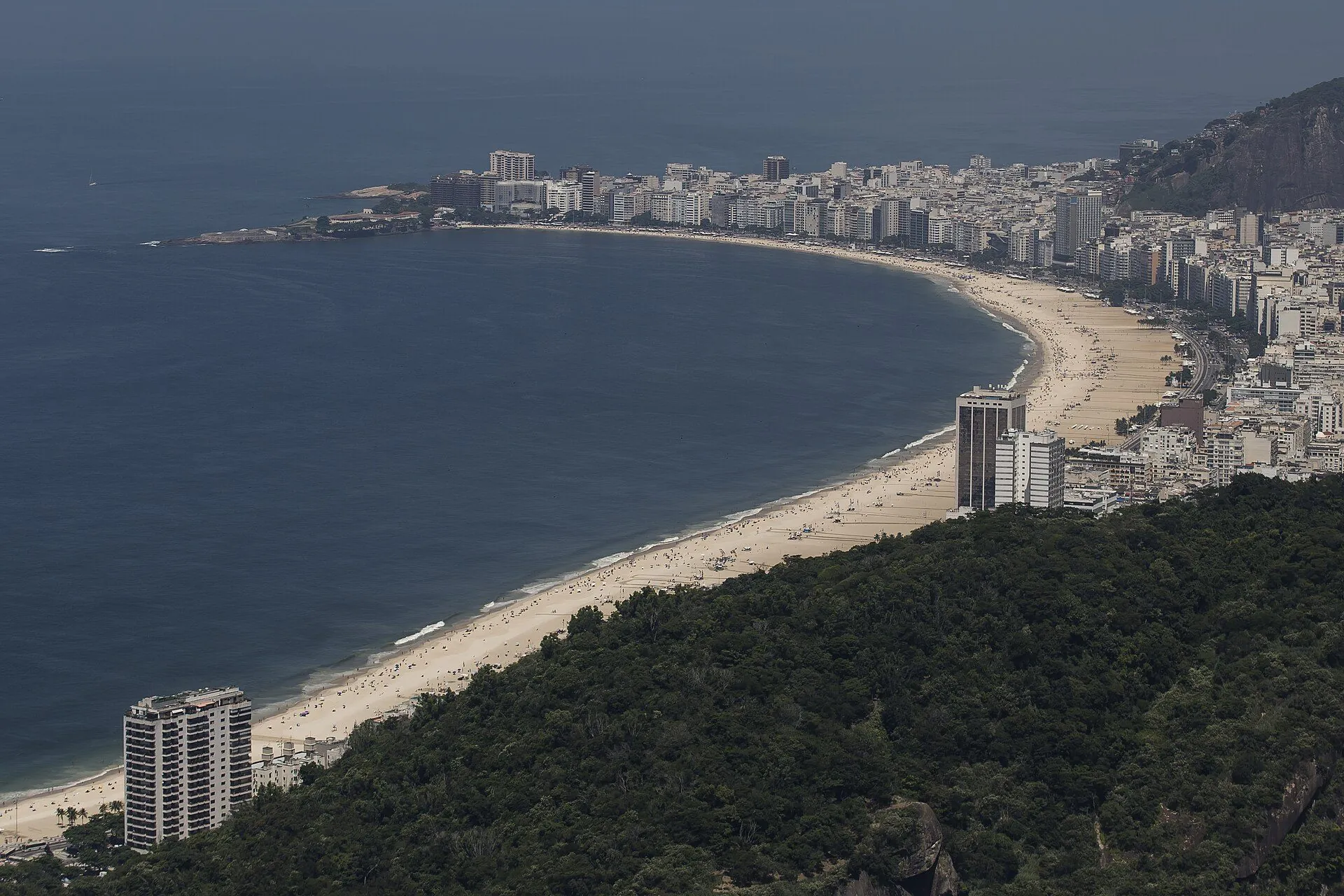
Seafront apartment buildings in Rio de Janeiro at dusk — insurance guide for foreign owners
Guides · Insurance

Insuring a Rio home, properly.

The building's policy does not cover your apartment. Most owners learn that the week a pipe lets go in the unit above. Here is the version we give our own clients — what to buy, what it costs, and the lines in the apólice that decide whether a claim actually pays.

01 · The two policies

The building is insured. Your apartment isn't.

Every condominium building in Brazil is required by law to carry insurance. The Código Civil (article 1.346) and the old condominium law (Lei 4.591/64) both say the same thing in plain terms: the whole edifício must be insured against fire and total or partial destruction. Your síndico arranges it, the cost sits inside the monthly condomínio fee you already pay, and on the day you buy your apartment you inherit a building that is, technically, insured. Most buyers stop thinking about insurance right there. That is the mistake.

That mandatory policy — the seguro condominial — protects the structure: the walls, the columns, the roof, the lift shafts, the common areas, the things that belong to everyone. It is written to rebuild the building if it burns down. It is not written to replace your kitchen, your art, the marble you laid in the bathroom, or the laptop someone walked out with. And it does almost nothing for the most common, most expensive thing that actually happens in a Rio apartment, which is water from one unit ruining the unit below it.

So there are two policies in your life, and you only control one of them. The building's is handled for you and you should still read it once. Yours — the seguro residencial — is the one nobody arranges unless you do. The whole of this guide is really about closing the gap between the two, because the gap is exactly where the losses land.

One reassurance before the detail: the dollar amounts here are small. A serious homeowner's policy on a good Zona Sul apartment usually runs less than what the building charges you for a single month of condomínio. The reason owners go without is never the price. It is that no one ever sat them down and explained which boxes to tick.

02 · The building's policy

Read the síndico's apólice once.

The seguro condominial is bought by the condominium as a whole and paid out of the building's budget, which is to say out of your monthly fee. The mandatory core is fire, lightning and explosion to the structure. Beyond that core, most well-run buildings in Leblon, Ipanema or Lagoa carry a good deal more — liability for accidents in the common areas (a guest who slips by the pool, a falling branch in the garden), damage to lifts, glass in the lobby, and increasingly a multi-risk condominium package that bundles 24-hour assistance for the building's own plumbing and electrical emergencies.

What it will not do is reach inside your front door. The dividing line insurers use is roughly this: if it is part of the building everyone shares, the condominial policy is in play; if it is inside your private unit, it is your problem. Pipes are the grey zone everyone argues about, and we will come back to them, because the riser that runs through your wall is "common" while the branch that feeds your sink is "private," and which side of that line a leak falls on can be the whole dispute.

Two practical moves when you buy. First, ask the administradora for a copy of the current condominial apólice and the apólice's renewal date — you want to know the insurer, the sum insured on the building, and whether civil liability and water damage to private units are included or excluded. Plenty of older buildings carry the legal minimum and nothing else, which tells you how much more weight your own policy has to carry. Second, check that the building actually paid the last premium. A lapsed condominial policy is more common than it should be, and you do not want to discover it from a fire.

If you sit on the condominium's council — and foreign owners are allowed to — the single most useful thing you can push for is a modern multi-risco condominial policy that explicitly covers civil liability and damage between units. It is not expensive spread across forty apartments, and it takes the sharpest edge off the neighbour disputes that otherwise end up in a Rio small-claims court.

03 · Your policy

Seguro residencial, module by module.

The policy you buy yourself is the seguro residencial. It is sold as a base cover with optional modules bolted on, and the art of it is choosing the modules — the coberturas — that match how Rio actually damages an apartment, and skipping the ones the salesperson likes because they carry commission. Here is the menu, in the order I would think about it.

Incêndio, raio e explosão — the base

Fire, lightning and explosion is the mandatory spine of every residential policy, exactly as it is for the building. On its own it is nearly useless for a flat — apartments rarely burn — but you cannot buy the rest without it, so treat it as the entry ticket and move on to what matters.

Danos elétricos — the claim everyone actually makes

Electrical damage is the cover Brazilians claim on more than any other, and foreigners always underestimate it. The grid here delivers surges — after a storm, after a blackout, after the kind of voltage swing that is routine in Rio summers — and surges kill televisions, fridges, air-conditioners, computers and the increasingly expensive electronics in a modern flat. The module is cheap, the claims are frequent, and it is the first box I tick after the base. Note the per-item and per-event limits, because a single surge can take out three appliances at once.

Roubo e furto — and the word that matters

Theft cover comes with a distinction that catches people out. Roubo is theft with violence or threat — a robbery. Furto is theft without violence, and it splits again into furto qualificado (with forced entry, a broken lock, a smashed window) and furto simples (something simply taken, no force). Standard policies pay on roubo and on furto qualificado where there is clear evidence of break-in; they very often exclude furto simples. Read which one you are buying. A doorman building in Ipanema has a low theft profile and you can keep this module lean; a ground-floor unit or a house behind a wall deserves the fuller version.

Danos por água e responsabilidade civil — the Rio essentials

Water damage and civil liability are the two I will not let a managed apartment go without, and they get their own section below because in a Rio building they are the same story told from two ends. In short: water damage covers what a leak does to your own apartment, and civil liability covers what your apartment does to someone else's — most often the neighbour underneath. Buy both. They are the difference between an annoying afternoon and a five-figure argument.

The contents number — where owners get it wrong

Every module is capped by a sum insured, and the one people set carelessly is conteúdo — contents. Walk the apartment and add it up honestly: furniture, electronics, the kitchen, anything you brought from abroad, any art. Under-insure and the insurer applies rateio — proportional settlement — which means if you insured contents for half their real value, they pay roughly half of any partial loss, not the full repair. It is the most common reason a paid claim still leaves the owner out of pocket. Over-insuring wastes premium; insuring honestly is the only sensible setting.

Assistência 24 horas — the part you use most

Almost every residential policy now bundles 24-hour home assistance — a locksmith (chaveiro), a plumber (encanador), an electrician, a glazier (vidraceiro) — sent out and paid by the insurer for small emergencies, with no claim filed and no effect on your premium. For an owner who is not always in the country, or who speaks limited Portuguese at eleven at night, this is quietly the most valuable line in the policy. Check the number of call-outs per year and the call-out caps; they vary more than the headline cover does.
04 · Water & neighbours

The leak below you is the real risk.

If you remember one paragraph from this guide, make it this one. In a Rio apartment building the single most likely insurance event, by a wide margin, is not fire or burglary. It is infiltração — water escaping from your unit and damaging the one below, or water arriving from the unit above and damaging yours. Old buildings, old pipes, a sealant that finally gives up behind a wall you cannot see; a washing-machine hose, a clogged drain on a terrace during a downpour, a silicone joint in a box shower. It happens constantly, the damage is to someone's ceiling, paint, fitted wardrobes or electronics, and the bills are real.

This is why responsabilidade civil familiar — family civil liability — is non-negotiable on a managed apartment. It pays when you are the source: your leak ruins the flat below, your air-conditioner condensate stains a neighbour's wall, a guest is hurt inside your unit, an object falls from your window. Without it, a determined neighbour takes you to court, and a foreign owner who is rarely in the country is the least sympathetic defendant a Rio judge will see that month.

The mirror cover is danos por água on your own side — repairs to your apartment when the water comes from above or from your own failed plumbing. Read the wording carefully, because insurers draw fine lines here: leakage from internal pipes is usually covered; water that comes in through a poorly sealed facade or window during heavy rain is often treated as a maintenance failure and excluded. If your apartment faces the weather — and the good ones in Rio face the sea — ask the broker specifically how rain-driven infiltration is handled before you assume it is.

A particular Rio hazard deserves naming: the air-conditioner on the facade. Older buildings are studded with split-unit condensers and window machines hung over the street, and they fall, and they drip, and they stain. If yours is mounted outside, that is a liability exposure pointed straight at the cars and people below, and it is precisely what civil liability is for. We check the brackets on every apartment we take on. You should too.

05 · Rain & the hillsides

Temporais, alagamento and the slope behind the house.

Rio's rain is not a gentle thing. The summer temporais drop a month of water in an afternoon, the storm drains overflow, low streets flood, and the hillsides move. None of this is exotic — it is on the news every January — and how your policy treats it depends entirely on where the apartment sits and which modules you bought.

Windstorm and hail — vendaval e granizo — is a standard, inexpensive module and worth having; it covers wind damage and the occasional violent hailstorm. Street flooding — alagamento or inundação — is the one to ask about by name. A ground-floor unit, a garagem in a low building, a house near the lagoa or in parts of the Centro and Zona Norte can take water at floor level, and flood cover is frequently a separate, optional, sometimes surcharged line. If you are on a high floor in Ipanema it is irrelevant; if your storage and parking are below grade, it is not.

The serious one is the slope. Some of Rio's most beautiful addresses — Joá, parts of São Conrado, Santa Teresa, the villas cut into the morros — sit below or beside steep ground, and deslizamento, landslide, is a genuine Brazilian peril. Many residential policies exclude earth movement entirely, or cover it only as a named extension. If you are buying a hillside villa, do not assume; have the broker confirm in writing whether deslizamento is in or out, and price the extension if it is available. This is exactly the kind of policy detail we recommend you get in writing from the insurer rather than take on a salesperson's word.

One peril you can stop worrying about: earthquake. Brazil sits in the stable interior of its tectonic plate and Rio does not do meaningful earthquakes, so no, you do not need the cover, and any policy that quietly sells it to you is padding the premium. Spend that money on the water and liability modules instead, where the actual losses live.

06 · The numbers

Less than one month of condomínio.

Brazilian homeowner's insurance is cheap, and the gap between owners who carry it and owners who do not is almost never about money. For a well-located Zona Sul apartment, a sensible seguro residencial — base fire cover, electrical damage, theft, water damage, civil liability, glass, and 24-hour assistance, with honest sums insured — generally lands somewhere in the region of R$400 to R$1,500 a year. A larger apartment with serious contents, or a house with grounds and a pool, runs higher; a modest flat with modest contents runs lower. Treat those figures as a planning range, not a quote — the only real number comes from a broker pricing your specific address.

What moves the premium, in rough order: the sum insured on contents and on civil liability; the theft profile of the location and whether the building has a doorman and 24-hour porteiro; the modules you add (flood and landslide extensions cost real money where they are available); and the franquia — the deductible — you accept. A higher franquia lowers the premium; just make sure it is a number you would actually absorb on a small claim rather than a figure that quietly makes the cheaper modules worthless.

You can usually pay annually or split it across the year — many insurers offer ten or twelve interest-free instalments on the boleto or card. For an owner running the apartment through a Brazilian holding company, the premium is generally a deductible operating expense against rental income, which takes a further bite out of an already small cost. The arithmetic is not complicated: the policy costs less than the building charges you for a month, and the first water claim you avoid paying yourself returns several years of premium at once.

07 · If you rent it out

Temporada changes the policy.

Here is the trap that catches owners who buy a flat to live in and later decide to let it on the short-stay market. A standard seguro residencial is written on the assumption that the apartment is your home. The moment you start renting it by the night — locação por temporada, the Airbnb model — you have changed the use, and an insurer that was never told can decline a claim on exactly that basis. The policy did not get more expensive; it got quietly void.

If you let the apartment, the use has to be declared and the policy has to permit it. Some insurers will endorse a residential policy to allow temporada use; others sell a distinct product for rented and short-stay property. Either way the cover you care about shifts toward the things a guest can do — accidental damage to your contents, theft by or during a let, and above all the civil liability for a guest who is injured on your floor, in your shower, on your stairs. A stranger in the apartment every week is a different risk profile from you living there, and the apólice has to say so.

This is one of the reasons every home we manage at Art de Vivre runs on a single broker and a policy written for how the property is actually used. When we take a flat into short-stay management we make sure the cover names the use, carries proper guest liability, and sits alongside the platform's own host protection rather than assuming it. The platform guarantees are real but narrow, and reading them as a substitute for your own policy is how owners end up uninsured without knowing it.

A separate note for the long-let landlord, because the word "insurance" gets used for two different things in a Rio lease. Seguro fiança locatícia is not property cover — it is a rent guarantee. The tenant pays a premium and the insurer stands behind the rent and charges if the tenant defaults, in place of a fiador (guarantor) or a cash caução (deposit). If you let your apartment unfurnished on an annual contract, seguro fiança is the instrument that protects your income; the seguro residencial still protects the building's interior. They are complementary, not alternatives, and a good broker arranges both.

08 · The empty-apartment trap

An empty flat is half-insured.

This one is for the foreign owner specifically, because it is the gap we see most often. You buy a beautiful apartment in Leblon, you come for a few weeks in the summer, and the rest of the year it sits dark and locked. You assume it is fully insured because the premium is paid. Frequently it is not. Most residential policies reduce or suspend the theft cover — and sometimes more — once the property is desocupado, unoccupied, beyond a stated period, commonly thirty, sixty or ninety days. The logic is simple from the insurer's side: an empty flat is an easier target and a leak runs for weeks before anyone notices.

So the foreign owner who leaves the apartment empty for nine months is exposed in precisely the period they cannot watch it. The fixes are straightforward once you know to ask. Some insurers will write or endorse cover for a property that is habitually vacant, at a higher premium and usually with a condition that someone inspects it periodically. Some will hold the water and liability cover even while suspending theft. And the most practical fix of all is not to leave it empty at all — a managed apartment that is cleaned, checked and occasionally let is, in the insurer's eyes and in reality, a far better risk than a sealed box no one has opened since March.

It is one of the quieter arguments for putting an absentee home into management. Beyond the rent, a watched apartment keeps its insurance intact, catches the small leak before it becomes the neighbour's lawsuit, and gives the insurer the regular human presence most vacancy clauses are really asking for. If you are going to be away, tell your broker honestly how the apartment will be used. The worst answer at claim time is the one where the insurer discovers the truth before you do.

09 · Title insurance

You can't buy it here — and you don't need to.

Buyers from the United States ask about title insurance almost reflexively, because at home it is a line on every closing statement. In Brazil it essentially does not exist as a retail product, and the reason is structural: Brazil protects title through a public registry rather than through insurance. Ownership lives on the matrícula — the registered record of the property held at the Cartório de Registro de Imóveis — and that record, not a policy, is what proves and defends what you own.

What replaces title insurance, then, is due diligence done properly before you sign. You pull the up-to-date matrícula and read its full chain. You pull the certidões on the property and on the seller — the negative certificates that show no liens, no mortgages, no tax debts, no lawsuits and no labour claims that could attach to the asset. Get those right with competent counsel and the registry itself is your protection; get them wrong and no policy was going to save you anyway. It is more work up front than buying a policy and rather more reassuring once it is done.

We walk through that whole process — the matrícula, the certidões, the holding-company question, the registry — in the buying in Rio guide and the legal walk-through. The short version for an insurance guide: spend on the lawyer and the searches, not on a title policy that no respectable Brazilian insurer will sell you. The protection here is paperwork done once, properly, at the cartório.

10 · Buying it & claiming

The broker, the documents, and the day you claim.

Insurance in Brazil is regulated by SUSEP, the federal insurance authority, and it is sold through a licensed corretor de seguros — an insurance broker registered with SUSEP. You can buy direct from some insurers' apps, but for a foreign owner I would use a broker every time. A good one quotes three or four insurers against your actual address, explains the exclusions in language you understand, and — the part that earns the fee — fights your corner when a claim is being assessed. The brokerage commission is built into the premium either way, so a competent broker costs you nothing extra and saves you the one argument that matters.

What you will need to put cover in place: your CPF, the property address and a sense of its construction and value, the building's profile (doorman, porteiro, number of floors), an honest contents figure, and a clear statement of how the apartment is used — lived in, let long-term, let by the night, or left empty. That last answer shapes the whole policy, so give it straight. If you own through a Brazilian holding company, the policy is usually written in the company's name, with you listed as beneficiary.

When something happens, the sequence is its own small discipline. You notify the insurer promptly — the aviso de sinistro — within the policy's stated window. For theft or any criminal event you file a boletim de ocorrência, the police report, because no insurer pays a theft claim without one. You photograph everything before you clean up, you keep receipts and proof of ownership for the items you are claiming, and you let the regulador de sinistro — the loss adjuster — inspect before you repair. Once your documentation is complete, the insurer is on a regulated clock to pay or to give you a written reason, and a deadline is a useful thing to be able to point at.

For the homes we manage, all of this sits with us and one broker: the cover is written for how the property is actually used, the policy renews on time, and if a pipe goes at two in the morning while the owner is in London, it is our phone that rings, not theirs. If you would like an introduction to the broker we use, or a second read on a policy you have already been quoted, just ask — there is no commission in it for us, only a quieter year for the owner.

11 · Frequently asked

Questions owners actually ask.

Isn't the building already insured? Why do I need my own policy?

The building's mandatory policy covers the structure against fire and destruction and the common areas. It does not cover the inside of your unit — your contents, your renovation, theft from your apartment, or the damage your leak does to a neighbour. Those are the things your seguro residencial is for, and they are the losses that actually happen.

Can a foreigner or a non-resident buy property insurance in Brazil?

Yes. You need a CPF, which you will already have from the purchase, and the policy can be written in your name or in the name of the Brazilian holding company that owns the apartment. Non-residency is not a barrier to cover; it just makes the vacancy question more important.

What does it cost?

For a typical Zona Sul apartment with sensible coverage and honest sums insured, plan on roughly R$400 to R$1,500 a year — less than one month of condomínio for most buildings. Larger homes, serious contents, pools and grounds cost more; the only real figure comes from a broker pricing your specific address.

I want to put it on Airbnb. Does my policy still work?

Not automatically, and this is the most expensive mistake we see. A standard residential policy assumes you live there; renting by the night changes the use, and an insurer that was not told can decline the claim. Declare the short-stay use and have the policy endorsed for temporada or written as a rented-property product, with proper guest liability. The platform's own host protection is real but narrow — do not treat it as your policy.

The apartment will sit empty most of the year. Am I covered?

Often only partly. Most policies reduce or suspend theft cover once a property is unoccupied beyond a stated period — frequently 30, 60 or 90 days. Tell your broker the truth about the vacancy and either buy cover written for a habitually empty property or, better, put it into management so it is watched, checked and occasionally let. An insurer treats a watched apartment far more kindly than a sealed one.

My neighbour's apartment flooded because of my pipe. Who pays?

Your responsabilidade civil familiar cover pays, which is exactly why we never let a managed apartment go without it. Without that module, the neighbour's claim comes to you personally — and a foreign owner who is rarely in the country is the least sympathetic defendant in a Rio courtroom. It is the cheapest peace of mind in the whole policy.

Do I need title insurance like I would at home?

No — it essentially does not exist in Brazil, because title is protected through the public registry, not a policy. Your protection is proper due diligence before you sign: a clean matrícula and the right negative certidões, done with competent counsel. We cover that in the buying in Rio guide.

Should I worry about earthquakes or landslides?

Earthquakes, no — Rio does not have meaningful seismic risk, and any policy charging you for it is padding the premium. Landslides, sometimes yes: if you are buying a hillside villa in Joá, São Conrado or Santa Teresa, confirm in writing whether deslizamento is covered or excluded, because many policies exclude earth movement unless you add it as a named extension.

Can Art de Vivre arrange this for me?

Yes. Every home we manage runs on one broker and a policy written for how the property is actually used, so the cover is right, it renews on time, and the emergency call comes to us. We are happy to introduce you to that broker or give a second read on a quote you already have — there is no commission in it for us. Start a conversation.

ADV
Charles Jonas
Principal broker · Art de Vivre · CRECI-RJ 009278/O

Charlie has run Art de Vivre — a CRECI-licensed Rio de Janeiro brokerage with a luxury rental portfolio — since 2011. He buys, sells and manages apartments and villas across Copacabana, Ipanema, Leblon, Joá and São Conrado, and writes these guides from what actually happens at the closing table rather than from a brochure. Have a question on a real apartment? Start a conversation.