Visas & residency.
Six legal routes lead a foreign owner of Rio property to residency — and, four years on, to a Brazilian passport. Here's what each one costs, who it suits, and where files tend to come unstuck.

Six legal routes lead a foreign owner of Rio property to residency — and, four years on, to a Brazilian passport. Here's what each one costs, who it suits, and where files tend to come unstuck.
Brazil has one of the most generous immigration menus in Latin America — five distinct legal routes to residency for an international owner, including one (the digital-nomad visa) that needs no investment at all and one (the innovation investor visa) with a threshold low enough to fit on a single line of an invoice. The confusing part is the names: the letter codes (VIPER, VITEM IX, VITEM XIV) get used three different ways across three official sources. The table below cuts through it.
| Route | Threshold | Best for | Residency | Processing |
|---|---|---|---|---|
| Real-estate investor VIPER · VITEM IX | R$1M (S/SE) R$700k (N/NE) |
Buyers acquiring R$1M+ of Rio property | Temporary → permanent | 3–8 months |
| Digital nomad VITEM XIV | USD $1,500/mo remote income |
Remote workers testing Rio out | 1 year, renewable | 1–3 months |
| Retiree VITEM XIV | USD $2,000/mo passive income |
Pensioners & passive-income retirees | 2 yrs → then indefinite | 2–4 months |
| Business investor | R$500,000 into a BR company |
Owners running a Rio business | Immediate permanent | 3–6 months |
| Innovation investor | R$150,000 into a tech co. |
Founders & tech investors | Immediate permanent | 3–6 months |
Swipe the table sideways →
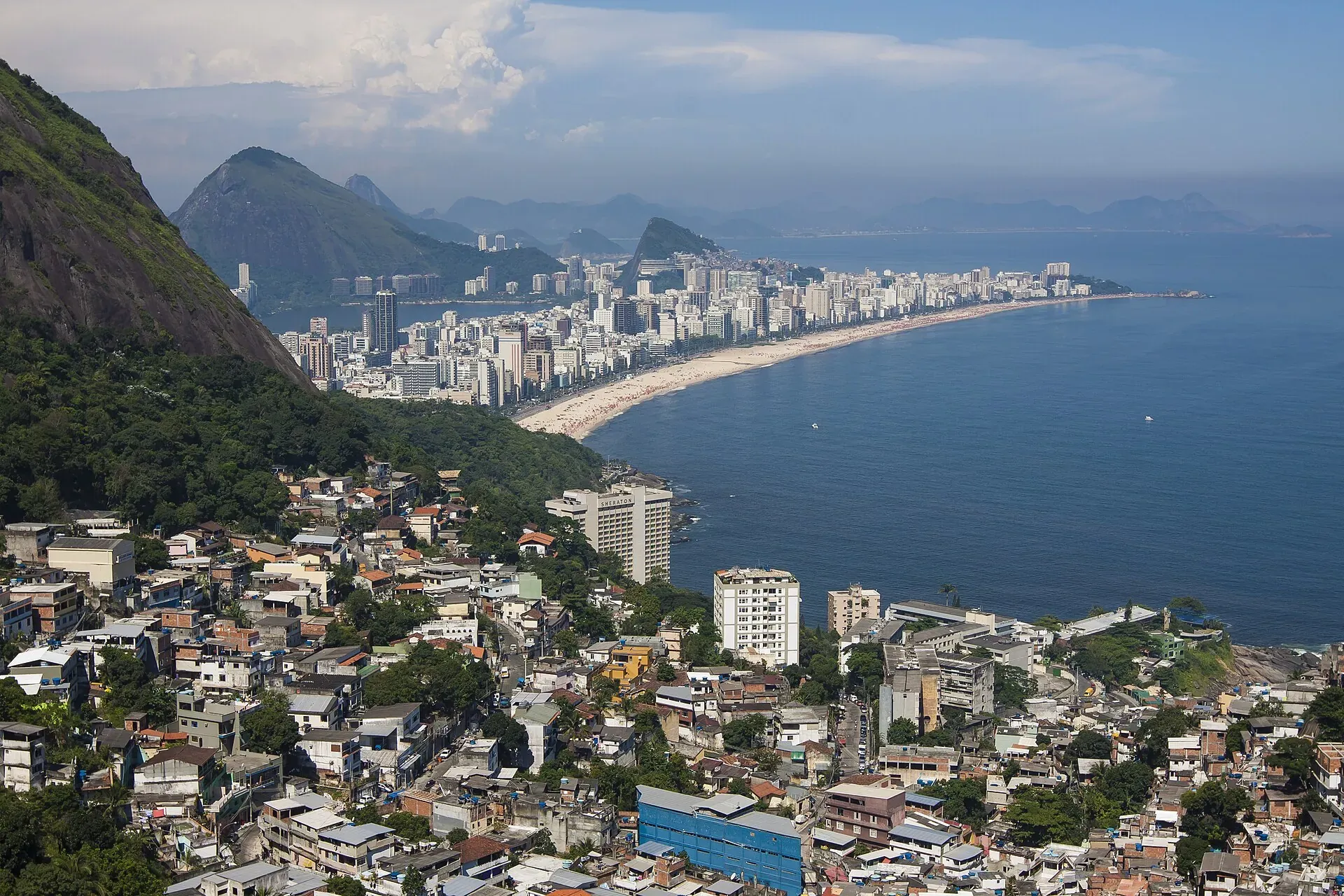

The flagship pathway for our clients is the Real-Estate Investor Visa — a permanent-type visa under the VITEM IX investor category, usually shortened to VIPER in consular paperwork. The mechanics are straightforward: buy and register a property in your own name (or in a Brazilian holding company you control), file the investment with the Banco Central, and submit the application either at a Brazilian consulate in your country of residence or, if you're already here on a temporary visa, at the Polícia Federal.
The lump-sum investor routes, side by side. The real-estate threshold is the highest — but it's the only one that buys you an asset you can live in or rent out.
Income-based routes (digital nomad, retiree) require monthly income rather than a lump sum, so they're not on this chart. R$1M ≈ USD $190,000; R$700k ≈ USD $133,000.
The federal government set the lower R$700,000 threshold deliberately, to channel foreign capital toward the North and Northeast — Bahia, Ceará, Pernambuco. The policy works, but for a buyer who actually wants to live in Rio it's a non-option, because Rio sits in the Southeast at the R$1M tier.
What R$1M buys, in our market, is real. At Leblon's ~R$25,000/m² it's about 40 m² — too small to live in but a fine investment unit. At Copacabana's ~R$12,000/m² it's a comfortable 80–90 m² two-bedroom on the beach. In Botafogo, where a lot of recent foreign-buyer money has gone, R$1M reaches into 90+ m² with views and a well-run building. The visa doesn't care whether you live in the apartment or rent it out short-term.
Separate from the property itself — for that, see ITBI, cartório and registration fees in our Buying in Rio guide.
The under-discussed lever inside VIPER is that you can aggregate multiple properties to reach the threshold. The R$1M is a portfolio number, not a per-unit number. We've built qualifying packages from two-, three- and even four-unit acquisitions — almost always for clients who want the rental yield of several smaller units rather than one larger one. A pair of R$525,000 one-bedrooms in Botafogo qualifies just as cleanly as a single R$1.05M three-bedroom in Lagoa, and the rental math is usually better.

The aggregation play also opens smarter capital deployment. R$1M into one beachfront unit in Ipanema is a single income stream tied to one building and one manager. The same R$1M split across a Botafogo studio, a Flamengo one-bedroom and a Santa Teresa boutique stay diversifies your nightly-rate exposure across three sub-markets and three guest profiles. We've watched portfolio yields move from ~6% on the single-unit version to ~9–11% on the diversified version. That isn't financial advice — it's the pattern in our own books.
Some of our clients buy property in Rio and never apply for an investor visa at all. They live here under one of the other four pathways, because their situation fits a different route better. Each is worth knowing.

The fastest-growing route. You must be employed by, or under contract with, a company registered outside Brazil — you cannot work for a Brazilian employer on this visa. Show USD $1,500/month in remote income, valid international health insurance, and a clean criminal record. Valid for one year and renewable. We've placed a lot of Botafogo and Santa Teresa rentals to nomad-visa holders in the last two years; many eventually buy and convert to an investor visa once they're sure Rio is the long-term move.

One of Brazil's most generous documents. There's no strict age requirement, but applicants over 60 get simplified renewals. Show USD $2,000/month in pension, social-security, retirement-account distributions or investment income — passive sources only. Grants an initial two-year temporary residency, renewable — and convertible to an indefinite permit — as long as the income keeps qualifying. Most retiree-visa clients buy in Flamengo, Laranjeiras or Lagoa — walkable, transit-rich, and easier per square metre than Leblon or Ipanema.
For buyers who want to run a business in Rio. R$500,000 (~USD $95,000) into a Brazilian company — yours or someone else's — earns immediate permanent residency, no temporary phase. The plan needs CNIg approval, and demonstrating Brazilian jobs strengthens the file. Property-related businesses qualify: short-term rental management, renovation, real-estate consultancy. We've helped two clients structure ADV-aligned property-management companies that doubled as their visa basis.

The smallest threshold of any investor visa in the Americas. R$150,000 (~USD $29,000) into a Brazilian innovation, science or technology company — a startup, a research-focused enterprise, or a clear tech-enabled SME — and you get immediate permanent residency. Processing is typically the fastest of the investor categories at three to six months. Rio's tech scene now centres on Porto Maravilha and Botafogo's startup corridor.

For digital-nomad-visa holders this is the central trade-off. The visa lets you live in Rio comfortably; the day-counting clock decides whether your foreign salary now sits inside Brazilian income tax. Some of our nomad clients structure their year deliberately — 170 days in Brazil, the rest abroad — to keep tax residency in a more favourable jurisdiction.
For investor-visa holders the calculus differs. Once you take up residence in Brazil under the permit, you are treated as a tax resident from that arrival date — regardless of how many days you then spend in the country. Confirm your position with a cross-border tax advisor. You file an annual declaration (Declaração de Ajuste Anual do IRPF) by the last business day of April, listing every foreign account, property and investment. Brazil has tax treaties with 35+ countries — Spain, France, Italy, Japan, most of Latin America — that prevent double taxation. The notable absence is the United States: there is no US–Brazil tax treaty, though one has been under negotiation since 2018. Most American clients neutralise the gap with the Foreign Tax Credit and the FEIE (USD $126,500 for 2024).
Whichever pathway you choose, the file always opens with the same eight documents. Get them right and the lawyer's job becomes drafting; get any one wrong and the whole submission cycles back. We've seen clients lose four months over an apostille issued by the wrong office.

Most refusals we see have nothing to do with the applicant. They're paperwork failures — small, fixable, predictable. The seven we see most, in rough order of frequency:

The visa gets you off the plane. The CRNM (Carteira de Registro Nacional Migratório) — Brazil's national migration card — is what actually lets you live here. You have 90 days from first entry to register with the Polícia Federal and request it. Miss the deadline and you face fines plus possible cancellation of the residency you just paid for.
Once the CRNM is in your wallet, carioca life unlocks fast — lease without a guarantor (most landlords still ask, but the legal barrier is gone), SUS healthcare, public school, verified Uber, iFood and bank-app accounts all key off the CRNM number. Laminate the card the day you get it; keep a digital photo of both sides; and keep the original visa-file binder forever, because the PF will ask for it again at renewal, again at conversion to permanent residency, and once more at naturalisation. Opening an account? See our Banking guide.

Every route arrives here: Brazilian citizenship, available after four years of continuous legal residency. The file goes to the Ministry of Justice, processing takes six to twelve months, and the requirements are unusually light — four years of residency (reduced to one year if you have a Brazilian child or spouse), basic written and spoken Portuguese, no criminal record at home or abroad, and the ability to support yourself.
The Portuguese test is genuinely basic — a fluent reading and short conversation, not an academic exam. Most of our investor-visa clients pass on the first attempt after a year of casual lessons; nothing here compares to the pressure of, say, the Italian B1 cittadinanza exam.
The official sources we point clients to, plus our own companion guides. Government portals are in Portuguese — your browser's translate will handle them.
Yes — and most of our investor-visa clients are in exactly that structure. The investment is registered with Banco Central in the holding company's CNPJ, and the application names you as the controlling shareholder. Charlie's lawyers handle the linkage routinely; the file is one page longer than for a personal-name buyer, no other meaningful difference.
For temporary residency, you typically need at least one entry per year. Permanent residents can stay outside Brazil for up to two consecutive years before status risk; longer than that and you should consult an immigration lawyer before re-entering. The investment itself must be maintained throughout — selling the qualifying property without rolling into another is the fastest way to lose the visa.
Yes for every investor pathway, the digital nomad visa and the retiree visa. Spouse plus dependent children are added as derivative applicants on the same file; they receive the same residency status and the same four-year clock to citizenship.
You can manage your own investments, including renting out your property. You cannot take a salaried job at a Brazilian employer. The Business Investor visa lets you work inside the company you invested in. The Digital Nomad visa permits remote work for foreign employers only. Once you have permanent residency or citizenship, all work restrictions disappear.
From clean closing to issued visa: typically five to ten months. Closing and registering ownership at the Cartório de Registro de Imóveis is two to four weeks; the Banco Central RDE-IED filing is about a week; gathering apostilled documents and translations is the slowest stretch (six to eight weeks if you start late); the consular or Polícia Federal review then runs three to eight months. The bottleneck is almost always the documents, not the consulate.
For VIPER, separate from the property itself: roughly R$8,000–15,000 in legal fees, R$3,000–6,000 in apostilles and sworn translations, and around R$1,000 in consular and government fees — total visa-side spend of R$12,000–22,000 (~USD $2,300–4,200). The bigger number is the property closing; see our Buying in Rio guide for ITBI, cartório fees and registration.
You've read the routes. Now tell Charlie where you hold a passport and roughly what you plan to invest, and he'll tell you which one fits your situation — and introduce the right immigration lawyer. Same day, no cost, no obligation.
Most of our clients structure the property purchase and the visa application as a single coordinated workstream. We handle the brokerage; our two preferred immigration lawyers handle the visa file. Same team, same timeline, four languages, one point of contact.