
The Parisian buyer arrives at this decision along a path that always surprises the Parisian and never surprises me. They have owned in the sixth, or the seventh, or the Marais, for long enough to know exactly what French prime property is and exactly what it costs to keep. They love their city with the particular, slightly exhausted love of someone who has stopped noticing how grey the winter is. And then they spend two weeks in Rio de Janeiro in the European February, and they come home and they cannot stop doing the arithmetic. What would the Paris money buy on that beach? Could it earn? Could it be a plan, rather than a fantasy? They find the site, they write to me, and this piece is the reply I would rather give in long form than in a single email — the honest comparison between the two cities, from a broker who has a stake in the answer and has tried to write past his own stake.
The stake, declared up front: I sell and manage apartments in Rio, and I would obviously be pleased if you concluded that Rio is the answer. I have written this to be useful before it is persuasive, which means I state plainly the several things Paris does better, because a European buyer deserves the real comparison and not a brochure. Where I lean on the French side of the picture — the IFI, the notaire, the rental-tax treatment — it is from French advisors I trust who have read this before publication, and even so you should treat every tax line here as the frame for a conversation with your own conseiller rather than as settled advice. The two cities are different enough that the right answer for one Parisian is the wrong answer for the next.
01 · Why a Parisian is looking at Rio
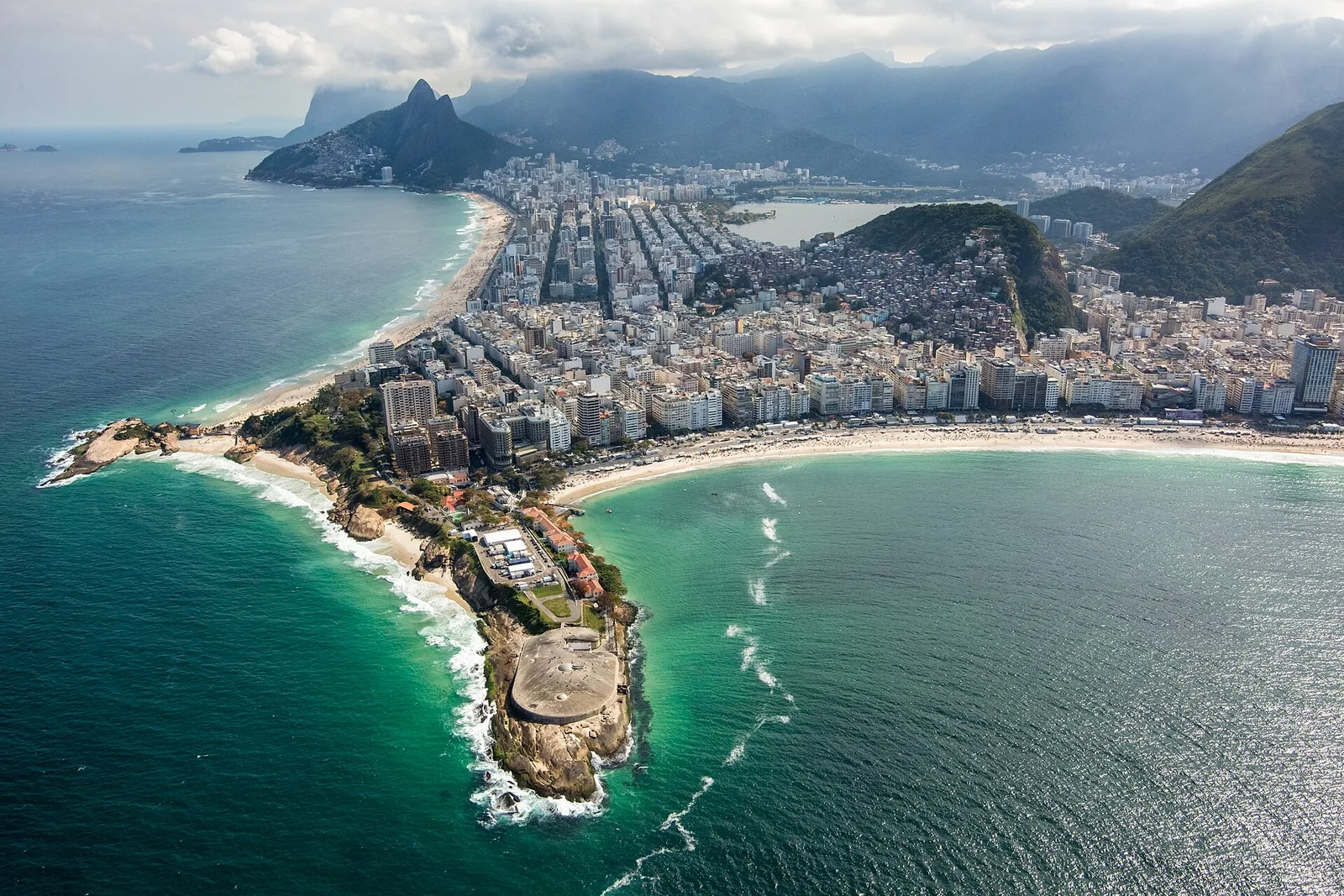
There is a real cultural affinity underneath the numbers, and it is worth naming because it is part of why the Rio apartment feels less foreign to a French buyer than the map suggests. Rio is, in its bones, a partly French city. Copacabana's great curving seafront promenade was reimagined in the Portuguese-Brazilian tradition that runs straight back to European boulevard design; the belle-époque apartment buildings of the Zona Sul would not look out of place on a grand French avenue; the modernism that gives Rio its architectural signature — Oscar Niemeyer, Lúcio Costa, Roberto Burle Marx — was in constant dialogue with Le Corbusier and the European avant-garde. A Parisian who walks into a well-proportioned 1950s Ipanema apartment recognises the language of the space immediately. The light is different, the sea is at the end of the street, but the grammar of good bourgeois European living is there, and it costs a fraction of what the same grammar costs at home.
The number underneath the affinity is a currency number. The euro is strong against the Brazilian real — at recent rates roughly five-point-nine reais to the euro — and it has been strong for years, which means a European buyer is entering the Rio market at a durable discount to what local buyers paid for the same buildings a decade ago. For a Parisian who has watched French prime property stagnate in real terms while the cost of holding it has quietly risen, the idea of deploying euros into an asset priced in a soft currency, in a city they already half-love, at a yield Paris has legislated away — that idea has a gravity that a brochure could never manufacture. It is arithmetic meeting affection, and it is why the email gets written.
02 · Preço por metro quadrado, com honestidade
Both cities quote in square metres, which makes this the cleanest comparison in the whole Journal — no square-foot translation, just euros against euros at the prime middle of each market.
The chart is the argument in one picture. Prime Paris trades at roughly two-and-a-half to three times the price per square metre of prime Ipanema, and the very best Paris addresses — the Triangle d'Or, the finest streets of the sixth — run closer to four times a Copacabana seafront apartment. Leblon, the single most expensive address in Rio, still costs less than half of good Left Bank Paris on a per-metre basis. As with every comparison in this Journal, the gap is currency and geography, not quality: the best Rio buildings have proportions, ceiling heights and terrace depths that a Parisian would recognise as thoroughly civilised, and the view from a good Ipanema apartment is one that no Paris apartment at any price can offer, because Paris does not have the sea.
The honest caveat on measurement and carry
Two things a careful French buyer should hold in mind. First, French listings typically quote the strict loi Carrez usable surface, while Brazilian listings quote a total private area that can include walls and a generous balcony, so the effective usable gap is a little smaller than the raw per-metre numbers suggest — though even after that correction, Rio is a fraction of the Paris price. Second, the cost of holding the two apartments differs in Rio's favour: a Paris prime apartment carries charges de copropriété plus taxe foncière that, together, are typically heavier than a comparable Rio building's condomínio plus IPTU. The sticker price understates the gap; the ten-year cost of ownership widens it.
03 · What one-point-four million euros buys
The abstract per-metre gap becomes real when you put the two actual apartments next to each other at the budget I see most often from a French buyer, one-point-four million euros, all in.
In Paris, €1.4M buys a handsome but not enormous two-bedroom of perhaps sixty to eighty square metres in the sixth or the seventh — a beautiful apartment in the best city in Europe to be a pedestrian, with a Haussmannian ceiling and a view of a courtyard or, if you are fortunate and stretch, a sliver of a monument. It will be a superb asset and it will feel, to a Parisian, entirely normal, because it is entirely normal. You will not gasp when you open the door.
In Ipanema, the same €1.4M buys a genuinely beautiful three-bedroom of a hundred and fifty to two hundred square metres, a short walk from the beach, quite possibly with a view of the water or the Lagoa, in a well-run building with a doorman team and — toward the top of that budget — a parking space and a pool. In Copacabana, on the seafront, the same money buys something larger still, or the same size with a renovation budget attached. This is the moment the comparison stops being theoretical. The euros that buy a civilised two-bedroom in Paris buy, in Rio, the kind of apartment that reorganises how a family thinks about its year. That contrast, more than any yield table, is what closes the psychological distance between the two cities.
Paris deserves its rebuttal stated at full strength, because there is a serious one. What the Paris apartment has that the Rio apartment does not is a location inside the European Union, in a city of unrivalled cultural density, in an asset class that has preserved capital across two centuries of upheaval, denominated in the buyer's home currency, walkable to everything, and requiring no flight at all to enjoy. For a buyer whose priority is capital preservation in euros with zero currency risk and zero travel friction, Paris is not the inferior choice; it is the correct choice, and I would not pretend otherwise. The Rio apartment is the better life per euro and the far better yield. The Paris apartment is the more certain, more convenient store of European value. Which sentence matters more is a fact about you.
04 · The yield each city allows you to earn
Here the two cities diverge most sharply, and the divergence is not about the buildings — it is about the law. Paris has spent the last several years deliberately suppressing residential yield in the name of housing supply and neighbourhood character, and it has largely succeeded.
The Paris story behind those bars is one every French buyer already half-knows. The encadrement des loyers — the rent-control framework — caps what a Paris landlord can charge on a long let, and it is enforced. The short-stay market, which would otherwise lift Paris yields toward the Rio range, has been progressively legislated down: a primary residence may be let short-term for no more than a hundred and twenty nights a year, registration is mandatory, and the 2024–2025 tightening of the furnished-tourism tax regime removed much of the remaining advantage. The direction of travel in Paris is unambiguously toward lower, not higher, residential yield.
Rio sits at the other end of the spectrum, and its advantage is exactly the thing Paris has removed: a permissive short-stay framework in the prime Zona Sul, where a well-located, well-furnished, professionally managed apartment earns a strong nightly rate from a global stream of visitors across a long season. As with every yield figure in this Journal, the honest footnote is that the gross is not the number you keep — management, cleaning, fees, vacancy, the condomínio, the IPTU and tax take a real third-to-half — but even net, a well-run Copacabana apartment produces a multiple of what a rent-controlled Paris prime apartment produces, and it does so while you also hold the currency-recovery option. For a Parisian who has accepted sub-four-per-cent yields as simply the nature of prime property, the first honest Rio net-yield conversation is usually the one that reframes the whole idea.
05 · Tax: the notaire, the IFI and Brazil
Tax is where a French buyer must be most careful, because France taxes wealth and worldwide assets in ways that specifically touch a foreign property, and the interaction with Brazil is particular to your residency. Read this as the frame for the conversation with your notaire and your fiscaliste, not as a substitute for it.
What Brazil takes
A non-resident foreign owner of a Rio apartment meets a simple regime. Rental income is taxed under a flat fifteen-per-cent non-resident withholding, remitted monthly. Annual municipal property tax — the IPTU — runs roughly six-tenths to one-and-two-tenths of a per cent of an assessed value that sits below market. Capital gains on sale are taxed on the reais gain from fifteen per cent, stepping up only for very large gains. There is no Brazilian wealth tax. Total buyer-side closing costs, dominated by the ITBI transfer tax, land in the six-to-eight-per-cent range. Crucially for a European, France and Brazil have a long-standing double-taxation treaty, so a French tax resident is protected from being taxed twice on the same income and gain — the mechanism exists and works, provided it is claimed correctly.
What France takes — and the IFI question
The French side is heavier and needs real attention. On the way in, French purchases of existing property carry frais de notaire of roughly seven to eight per cent, most of it transfer duty — a large entry cost the Parisian already knows. The line that most often catches a French buyer of foreign property, though, is the IFI, the impôt sur la fortune immobilière — France's wealth tax on real-estate assets. A French tax resident is, in principle, liable to the IFI on their worldwide real estate above the €1.3 million threshold, which can include the Rio apartment, subject to the relief the France–Brazil treaty provides. The IFI is progressive from 0.5 to 1.5 per cent, and whether and how the Brazilian apartment enters the base is exactly the kind of question your fiscaliste must answer for your specific situation before you buy, not after. It is entirely manageable — many French residents own foreign property and account for it correctly — but it is not a line to discover at the first déclaration.
The honest tax verdict for a French buyer is that Brazil's side is refreshingly simple, France's side is characteristically thorough, and the treaty makes the combination workable without any offshore structure — but the IFI means a Parisian must model the Rio apartment inside their whole French wealth picture, not as a standalone bet. Do that modelling with a competent fiscaliste first, and the tax is a reason to prepare rather than a reason to abstain.

06 · The flight and the time zone
A Parisian evaluating Rio as a place they will actually use, not merely own, needs the geography stated honestly, because it is less friendly than a New Yorker's and friendlier than most Europeans assume. The flight from Paris to Rio de Janeiro is roughly eleven and a half hours nonstop — Air France and LATAM both fly it — and Rio runs four to five hours behind Paris depending on the season. That is a real long-haul flight and a real, if modest, time difference; it is not the effortless overnight hop that Rio is for New York.
But set it in the European context and it is very manageable. It is a single nonstop flight, not a connection; the time difference works in the traveller's favour on the way out, since you gain hours flying west and land into a Rio afternoon with the evening ahead of you; and the direction of travel matters — a Parisian flies to Rio to escape the specific misery of the northern-European winter into a southern-hemisphere summer, which is the best possible reason to accept eleven hours in a seat. For a family that goes for the French school holidays — February, Easter, the long summer — the flight is a twice-or-thrice-a-year commitment rewarded with weeks of sun, ocean and space. It is not the New Yorker's weekend hop. It is entirely worth it for the stay a Parisian actually takes.
Paris to Rio is eleven hours and a summer. You leave the grey and land into the light, gaining the afternoon on the way. It is not a weekend flight — it is a season, and a Parisian takes it for the season.
07 · A foothold outside the European Union
A growing share of the European buyers I meet are not only buying an apartment; they are buying optionality — a foothold outside the European Union, a second place to be, a hedge against a decade nobody feels certain about. For a French citizen, whose passport is already excellent, the value is not visa-free travel but the residency itself and what stands behind it. Brazil grants permanent residency to a foreign individual who invests above one million reais — roughly one-hundred-and-seventy thousand euros at recent rates — in Brazilian real estate, under the investor-visa framework. That threshold sits well below the budget in this piece, which means the apartment doubles as the qualifying investment.
The residency is permanent on issuance, renewable, and opens, after a period of residency, a path toward Brazilian citizenship — a second, non-EU passport with strong access across Latin America. For a certain kind of Parisian thinking about geographic diversification, a warm-weather base for a future retirement, and a foothold on a continent whose long-run trajectory they find interesting, the residency pathway is quietly worth as much as the apartment. It is worth engaging a Brazilian immigration lawyer early, because the investor visa rewards structuring the purchase correctly from the first payment rather than retrofitting it later.
08 · Living there, not just owning there
The financial picture is one thing; the lived experience is another, and for a buyer who will spend real time in the apartment it often matters more than the yield. I have spent long stretches in both cities. Here is the honest texture.
Paris is the greatest pedestrian city in Europe and, for many, the world — a place where daily life is a sequence of small civilised pleasures, where the museum, the market and the café are all a walk away, where the culture is impossibly dense and the winters are impossibly grey. It is efficient, it is beautiful, it is expensive, and it is, for six months of the year, cold and dark in a way that wears on even the people who love it most. A Parisian knows exactly what they have and exactly what they lack.
Rio is the antidote to precisely what Paris lacks. It is warm when Paris is grey, it is oceanic where Paris is landlocked, it is spacious where Paris is compressed, and it trades some of Paris's efficiency and cultural density for light, sea, mountains and a slower, warmer rhythm. It rewards a European who arrives with curiosity and patience and punishes one who expects Parisian precision from the bureaucracy; the best of Rio — the food, the music, the geography, the way the city lives outdoors — is genuinely without equal, and the safety question is real and manageable with the right neighbourhood, building and habits, which I treat seriously elsewhere on the site. English and French are functional in the buyer-relevant Zona Sul but not universal; a little Portuguese transforms the experience. Most Parisians who buy in Rio are not leaving Paris. They are buying the half of the year that Paris cannot give them.
09 · The full side-by-side
| O que você compara | Rio de Janeiro | Paris |
|---|---|---|
| Prime €/usable m² | €3,700 – €7,900 | €11,000 – €22,000 |
| What €1.4M buys | 3-bed, 150–200 m², near the beach | 2-bed, 60–80 m², good arrondissement |
| Rentabilidade bruta no melhor cenário | 7%–13% | 2.5%–4.5% |
| High-yield short-stay allowed | Yes, in the Zona Sul | 120-night cap + registration |
| Imposto sobre aluguel · não residente | 15% fixo | 20% min + 17.2% social charges |
| Purchase entry cost | 6%–8% (ITBI-led) | ~7%–8% frais de notaire |
| Annual wealth tax on the flat | None | IFI, if over €1.3M worldwide |
| Flight from Paris | ~11.5h nonstop | — |
| Time difference from Paris | 4–5 hours behind | — |
| Residency via the apartment | Yes, from ~€170K | Home market (EU citizen) |
| Double-tax treaty | Yes, France–Brazil | Doméstico |
| Currency of the asset | BRL — near multi-yr lows vs € | EUR — the home currency |
Lendo a matriz
Two rows in that grid carry more weight than they appear to. The first is the wealth-tax line: France's IFI is the single structural cost that a Parisian buyer of foreign property most often overlooks, and it is the reason the Rio apartment must be modelled inside the whole French wealth picture rather than beside it — not a dealbreaker, but a real annual line that a New Yorker or a Londoner does not face in the same form. The second is the yield-versus-control pairing: Paris has, by deliberate policy, driven residential yield down toward the level of a government bond, while Rio still permits the short-stay model that lifts a good apartment into high single or low double digits gross. That contrast is not an accident of the market; it is a difference in what each city has decided residential property is for. Read the two rows together and you understand why a euro looking for income as well as a life keeps drifting south.
The European buyers actually doing this in 2026
The composite is more textured than the abstract. A Paris-based couple approaching retirement bought an Ipanema three-bedroom to run as a hybrid through us — their own use in the European winter, short-stay the rest of the year — and treat the yield as a supplement to a French pension that buys less warmth each year. A younger Parisian entrepreneur, able to work remotely, bought a smaller Copacabana apartment as a foothold and a residency play, and now spends the French winter working from a terrace above the beach. A Franco-Brazilian family with roots in both countries consolidated a modest Left Bank studio they had stopped using into a proper Leblon apartment, calculating that the Rio yield and the family connection together made the move obvious. None of them left Paris. Each decided that euros buy a better half-year, and a better yield, in a city that already felt partly French — and that the currency window was too favourable to wait out.
10 · The ten-year picture, with the IFI
A Parisian should model the decade rather than the purchase day, and for a French buyer the decade has a particular French wrinkle: the IFI. A prime Paris apartment carries the ordinary decade-long costs — charges de copropriété, taxe foncière — plus, for a French resident whose real-estate wealth exceeds the threshold, the annual impôt sur la fortune immobilière, levied year after year on the value of the property itself. Over ten years, a recurring wealth tax on the asset is a meaningful drag that a Parisian instinctively under-weights because it arrives quietly each spring. The Rio apartment sits inside the same IFI calculation for a French resident, subject to treaty relief, which is exactly why I have insisted a Parisian model it with a fiscaliste — but the Rio apartment also earns a real net yield through the decade that a rent-controlled Paris apartment cannot, and that income substantially offsets the carrying cost in a way the Paris flat's thin yield does not.
Set the two decades side by side. The Paris flat: a low yield, an annual wealth-tax drag, and a home market that has been steady rather than dynamic. The Rio apartment: a far higher net yield, the same wealth-tax consideration to be modelled, a lighter operating carry, and a currency-recovery option bought at a low. Across ten years measured on the money, the Rio apartment is the more productive asset even after the IFI is accounted for on both sides — provided the Parisian does the accounting rather than discovering it. The Paris flat's compensating advantages are real, but they are advantages of location, convenience and euro-certainty, not of return. A Parisian who models the full decade, IFI included, generally finds the Rio numbers hold up precisely because the yield does the work the Paris flat's yield never could.
11 · The honest risks of the Rio choice
I have made Rio's case hard against a Paris market constrained by rent control and the IFI, so let me make the risks of the Rio side equally plain. The first is the currency: the Rio apartment is priced and earns in reais, and a real that weakens further would soften its euro value and income, where the Paris flat is a clean euro asset. The honest response is the series' refrain — buy for the yield and the use, size the exposure deliberately, and treat the recovery as an option. The second is the IFI and the tax complexity itself: a Parisian must model the Rio apartment inside their whole French wealth picture rather than beside it, and that is a real piece of homework, not a formality, which is why the fiscaliste comes before the purchase, not after.
The third risk is distance and liquidity: eleven and a half hours and a modest time difference mean a Parisian should buy for meaningful stays rather than casual weekends, and a Rio apartment sells in months rather than the timeframe a Paris flat might, so it is patient capital. And the fourth is safety, a real consideration I treat seriously and at length elsewhere on the site, managed rather than dismissed through the right neighbourhood, building and habits. None of these overturns the case the piece has made — the price gap, the yield and the ten-year picture are powerful — but a Parisian who has not weighed these four against Paris's real advantages of proximity, culture and euro-certainty has not finished the comparison. The cultural affinity that makes Rio feel like a warmer arrondissement is genuine, but it should not substitute for writing the risks down; do both, and for a great many Parisians the balance still tips toward the light.
The honest sorting, then: Rio suits the Parisian who will use the apartment for real stretches, funds it from patient capital, models it inside their whole French wealth picture, and is drawn to the light, the ocean, the space and the permissive yield that rent-controlled, IFI-taxed Paris cannot offer. It does not suit the buyer whose overriding needs are euro-certainty, weeks-not-months liquidity, and the daily texture of Paris itself — for them, Paris is the honest answer and Rio is not the trade. Weigh those real Parisian advantages against the price gap, the yield and the ten-year picture; do the IFI homework with a fiscaliste first; and for a great many Parisians the balance still tips toward the warmer arrondissement, bought at a currency low the euro has rarely offered.
12 · My honest verdict
You have earned a recommendation rather than a survey, so here is mine, bias declared.
For a Parisian with roughly one-and-a-half million euros, who already owns their French home, who wants the best combination of lifestyle and yield a euro can buy in a real global city, and who is drawn to the specific thing Rio offers that Paris structurally cannot — light, ocean, space and a permissive yield — Rio is the stronger call on every axis except pure convenience and capital certainty. You will get two to three times the apartment per euro, a yield that is a multiple of rent-controlled Paris, a residency option folded into the purchase, and a southern-hemisphere summer to walk into when Paris goes grey. The price is a long-haul flight, a real time difference, a currency that carries risk as well as upside, and the discipline of modelling the apartment inside your IFI picture. All of that is manageable.
For a Parisian whose overriding priority is capital preservation in euros, zero currency risk, zero travel friction, and the unrivalled daily texture of Paris itself, staying in Paris is the honest answer — and I would rather tell you that than sell you a Rio apartment bought against your own grain. Paris is the more certain store of European value and the more convenient life. If certainty and convenience are the whole game, Rio is not the trade.
For most of the Parisians who actually reach us, though, the answer is not either-or. It is the Paris apartment they keep and the Rio apartment they add — the first for the certainty, the culture and the citizenship, the second for the yield, the sun and the half of the year Paris cannot provide. That is the trade I see working in 2026, and it works because of a currency window that will not stay open forever and a cultural affinity that makes Rio feel, to a French buyer, less like emigration than like discovering a warmer arrondissement. If you want that conversation with real apartments and real numbers, start it here — and if London is the other city on your shortlist, the companion comparison sits alongside this one.